The deepfake defense has arrived in court — what it means for fraud teams
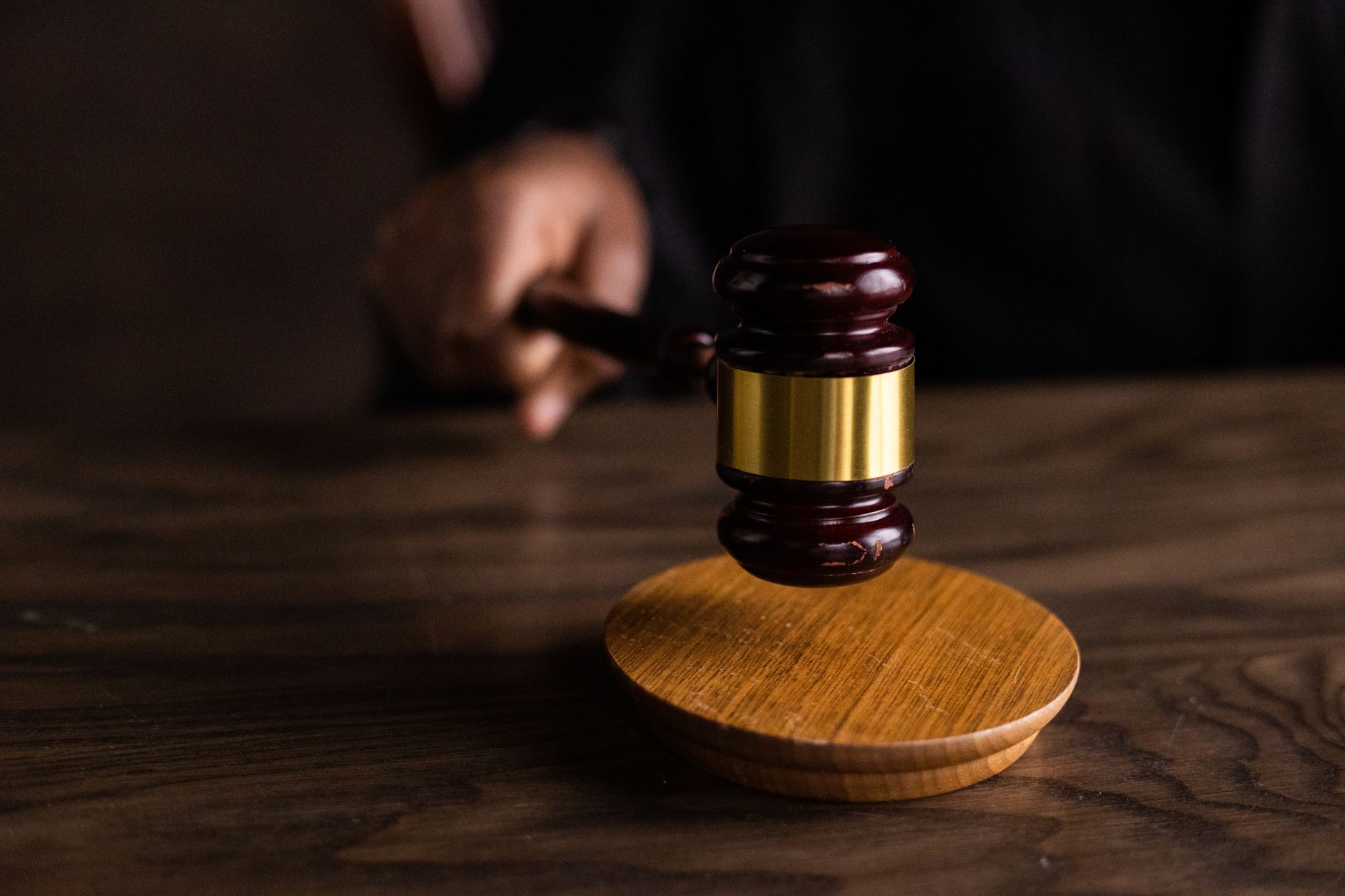
In September, a California judge dismissed a housing dispute case after discovering that the plaintiffs had submitted what appears to be an AI-generated deepfake video of a witness — one of the first documented instances of fabricated synthetic media being passed off as real evidence in a U.S. courtroom. It won't be the last. As generative AI makes producing a convincing fake video or voice recording as easy as typing a prompt, courts, banks, and fraud investigators are all colliding with the same unsettling question: how do you prove something is real?
The "deepfake defense" is already here
Legal scholars have a name for the newest courtroom tactic: the "deepfake defense." It works in reverse of the California case — instead of submitting fake evidence, defense attorneys simply claim that genuine, damaging evidence (a recording, a video, a voicemail) is AI-generated and therefore inadmissible. Because deepfakes have become so convincing, juries and judges increasingly can't tell the difference without expert forensic analysis, and that uncertainty is being weaponized. As one Illinois State Bar Association analysis put it, the problem isn't just fake evidence getting in — it's real evidence getting thrown out.
Why this problem doesn't stay in the courtroom
Banks, insurers, and HR teams are facing the identical authentication crisis, just outside a courtroom. A disputed wire transfer, a fraudulent loan application, a contested video KYC verification, a recorded "customer consent" call — all of these are pieces of evidence that a fraud team or compliance officer may need to defend as authentic, whether internally, to a regulator, or eventually in litigation.
When a recorded call becomes contested evidence
Consider a bank that approves a large wire transfer after a phone call it believes came from the account holder. If that call was actually a voice clone, the bank's own recording — the thing meant to prove due diligence — becomes evidence of the opposite. Without a forensic-grade way to determine whether the voice on the tape was human or synthetic, banks are left arguing in the dark, exposed to regulatory penalties and reputational damage.
Regulators are racing to catch up
The U.S. Judicial Conference's Advisory Committee on Evidence Rules has proposed a new Federal Rule of Evidence 707, which would subject "machine-generated evidence" to the same admissibility standards as expert testimony. Under the proposed rule, AI-related evidence would need to:
- Be based on sufficient, verifiable facts rather than assumption
- Be produced through a reliable, documented methodology
- Reflect a reliable application of that methodology to the facts at hand
- Be presentable by a qualified examiner, mirroring the Daubert standard applied to expert witnesses
That's a meaningfully higher bar than most organizations' current fraud-detection tooling is built to clear — and it signals where regulators and courts are heading well beyond the judicial system.
What forensic-grade detection actually needs to deliver
A "the AI probably thinks this is fake" score isn't enough when a transaction, a hire, or a legal outcome is on the line. Detection systems built for high-stakes decisions need to support:
- Chain of custody — a documented, tamper-evident trail from the original audio or video file to the analysis result
- Multimodal cross-verification — analyzing voice and face together catches manipulation that single-channel detection misses
- Confidence thresholds, not binary verdicts — real/fake calls need calibrated certainty, not a coin flip dressed up as AI
- Real-time operation — flagging manipulation during a live call or video interview, not days later in a post-mortem
This is precisely the gap between consumer-grade "deepfake spotters" and the kind of detection infrastructure that banks, insurers, and law enforcement actually need when the outcome has legal or financial weight.
The takeaway for fraud and security teams
Courts are only now confronting a problem that fraud teams have been living with for two years: synthetic media has outpaced the tools built to verify it. Waiting for a uniform legal standard to arrive before investing in real-time, forensic-grade deepfake detection is a bet that most banks, insurers, and identity platforms can't afford to make. The organizations that get ahead of this — building authentication into every voice and video touchpoint now — will be the ones that can actually prove what happened when it matters most.
Corsound AI's Deepfake Detect analyzes audio and video in real time to flag synthetic manipulation before it becomes a costly dispute — built for the evidentiary bar that regulators and courts are now setting.
Photo: KATRIN BOLOVTSOVA / Pexels
See Corsound AI Voice Intelligence In Action