deepfake detection is becoming trust infrastructure, not a point solution
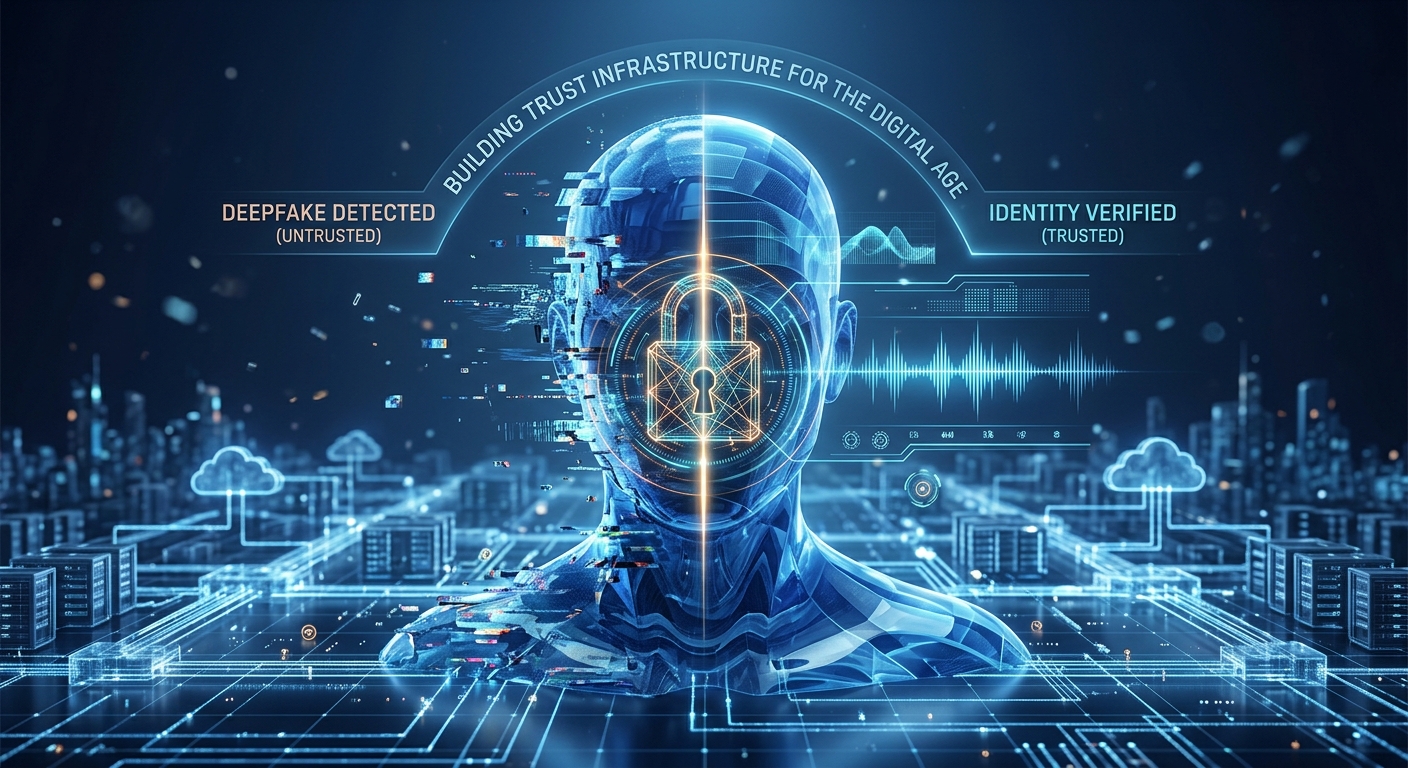
A fraud team shopping for deepfake defenses in 2026 is looking at a different market than the one that existed twelve months ago. In August 2026, Biometric Update published its 2026 Deepfake Fraud Detection Market Report, forecasting that combined voice and facial deepfake checks will more than triple from 3.01 billion in 2026 to 9.9 billion by 2028, with annual market revenue climbing from $1.5 billion to nearly $5 billion — a 49% compound annual growth rate. That kind of trajectory doesn't describe a niche security add-on. It describes the early buildout of what the report calls trust infrastructure.
From point solution to platform requirement
The report's core argument is that deepfake detection is outgrowing its original role as a standalone anti-spoofing tool. "Deepfake detection is increasingly becoming part of a broader AI fraud defense stack," said Chris Burt, managing editor of Biometric Update, in the report's release. "Organizations are no longer buying deepfake detection in isolation. They're evaluating it alongside liveness detection, injection attack detection, document authentication, identity orchestration and other technologies that together establish trust in digital interactions."
For banks, telecoms, and HR platforms, that means the procurement conversation has changed. A detection vendor that only flags manipulated video after the fact no longer meets the bar. Buyers are asking whether a tool integrates into the live call or onboarding pipeline, and whether it works alongside the rest of the identity stack rather than sitting beside it.
Capabilities that used to be premium are now baseline
The report notes that features once considered differentiators — passive liveness checks, injection attack detection, continuous rather than one-time verification — are becoming table stakes as generative AI attacks improve in quality and drop in cost.
The fraud data behind the buildout
The market isn't scaling in a vacuum. Entrust's 2026 Identity Fraud Report, based on more than 1 billion identity verification events across 195 countries, shows why enterprise buyers are moving fast:
- Deepfakes now account for 1 in 5 biometric fraud attempts, making AI-generated impersonation a mainstream attack, not an edge case.
- Injection attacks surged 40% year-over-year, as fraudsters feed manipulated video and audio directly into verification systems rather than attacking a live camera or microphone.
- Deepfaked selfie attempts rose 58% in a single year, tracking the falling cost and rising availability of deepfake-generation tools.
Put together, the two reports describe the same shift from opposite ends: attack volume is forcing detection spend up, and detection spend is consolidating into integrated platforms rather than single-purpose tools.
Voice is still the gap in most stacks
Most of the layered defenses discussed in the market report — facial liveness, document authentication, injection detection — are built around the visual and document channel. Voice is often bolted on separately, if it's covered at all, even though phone-based social engineering, executive impersonation, and contact-center fraud remain some of the highest-loss attack paths for banks and telecoms.
A stack that can match a caller's voice to a face in real time, without requiring a pre-enrolled biometric database, closes that gap without adding another siloed tool to the pile — which is exactly the kind of consolidation the market report says buyers are now prioritizing.
What security leaders should look for now
- Cross-modal verification — voice and face checks that reinforce each other, not two disconnected point tools.
- Real-time integration into the call or video pipeline, not after-the-fact forensic review.
- No dependency on a pre-built database for every new caller or applicant to be checked.
- Evidence of independent testing as detection standards and benchmarks continue to mature.
The market data confirms what fraud and security teams handling live calls, video onboarding, and remote hiring already suspect: deepfake detection is no longer optional tooling bolted onto an existing process — it's becoming the layer the rest of identity verification depends on. Corsound AI's Deepfake Detect and Voice-to-Face AI close the voice-side gap in that stack, matching a caller's voice to a face without a database. See how it fits into a bank's broader fraud defense at corsound.ai/banking-and-finance.
See Corsound AI Voice Intelligence In Action