document deepfakes just became identity fraud's fastest-growing weapon
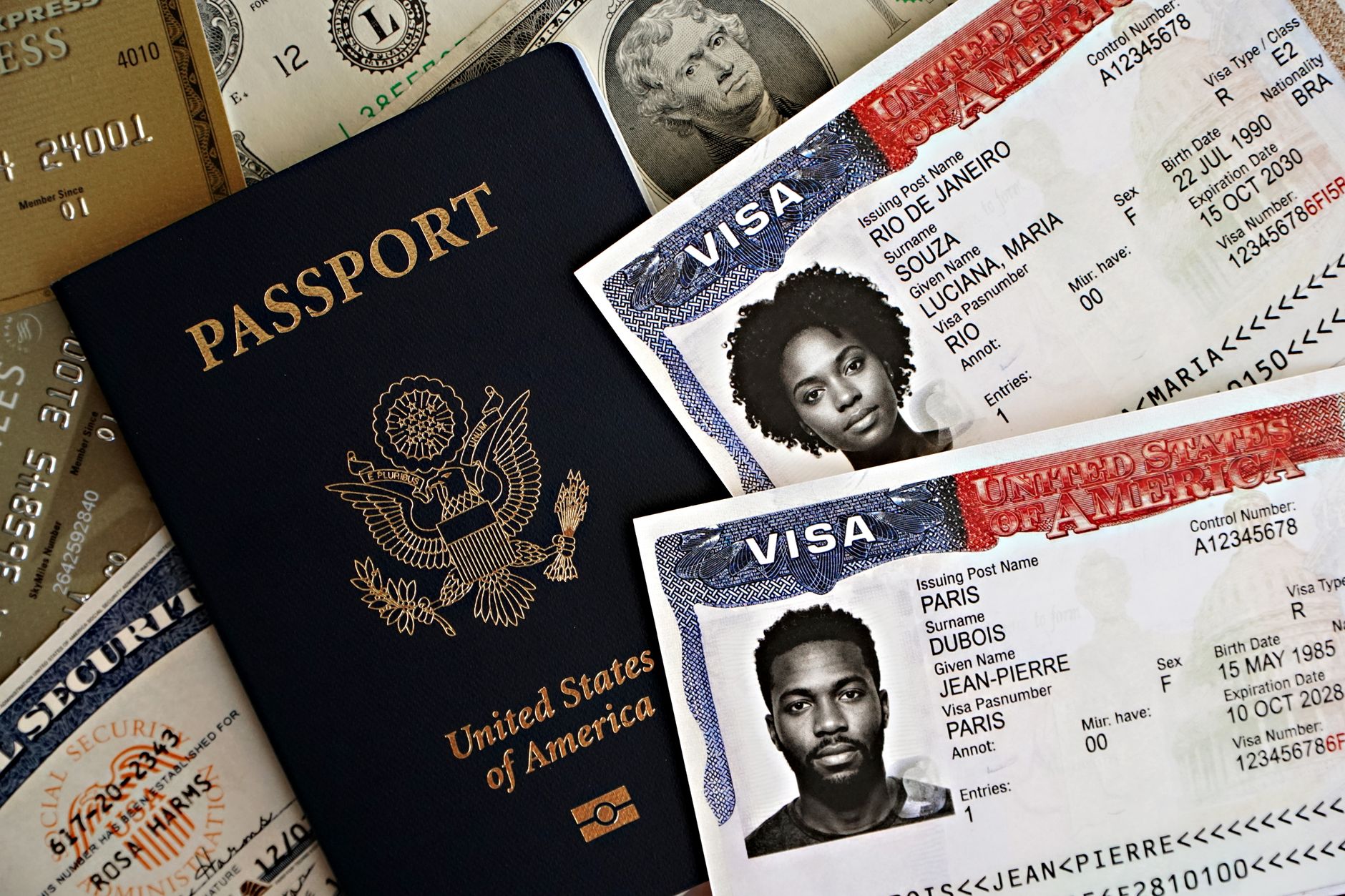
By the end of 2026, one category of identity fraud is projected to grow 3,892 percent — roughly forty times its 2025 volume. It isn't a voice-cloned CFO or a real-time face swap on a video call. It's the document scan: the driver's license photo, the passport bio page, the utility bill a new customer uploads to open an account. According to Shufti's 2026 Identity Fraud Index Report, document deepfakes — AI-generated IDs and supporting documents submitted as genuine — are now the fastest-growing category in a fraud stack on pace to increase 495 percent overall this year.
A fraud stack with four heads
Shufti's researchers tracked four primary attack types across its identity verification network, and each behaves differently:
- Synthetic identity — entirely fabricated faces of people who don't exist. The largest category by volume, comprising 42.3% of 2025 deepfake fraud and growing roughly 73% in 2026.
- Live video deepfakes — manipulated live streams during onboarding or KYC checks, 28.1% of 2025 volume.
- Face swaps — a real person's face mapped onto an attacker's head in real time, 17.6% of 2025 volume.
- Document deepfakes — AI-produced IDs, passports, and proof-of-address documents. Only 11.9% of 2025 volume, but projected to grow 3,892% in 2026 — by far the steepest curve in the report.
What makes document fraud different is the barrier to entry. Generating a convincing fake ID used to take real graphic-design skill. Now it takes one reference image or a text prompt fed into an open-source generative model, run on cheap cloud compute. As ASIS Security Management reported, the marginal cost of producing another synthetic ID is close to zero — so once an attacker has a working pipeline, fraud scales without friction.
Why the "upload a selfie and an ID" flow is breaking
Most onboarding flows still lean on a two-step check: photograph your ID, then take a selfie to match against it. That model assumes both inputs are genuine. Deepfakes attack that assumption directly, and the industry is starting to notice. Gartner predicts that by 2026, 30% of enterprises will no longer consider identity verification reliable in isolation when it depends on a single document-and-selfie pair.
Human reviewers aren't a reliable backstop either. A 2025 study published in Scientific Reports found that people could correctly identify an AI-generated voice only around 60% of the time — and video deepfakes have closed a similar gap, since mismatched audio and lip movement used to be the giveaway. Attackers now combine techniques for maximum effect: pairing a presentation attack with a synthetic identity, or using an injection attack to pipe an AI-generated document or video straight into a verification tool, bypassing the camera entirely.
Deepfake-as-a-service lowers the bar further
Dark web marketplaces now offer "deepfake-as-a-service" tooling that produces custom synthetic identities on demand, and mobile apps can execute real-time face-swapping during a video call with no local training required. The technical expertise that once limited this kind of fraud to sophisticated crews is gone — which is exactly why volume is climbing so fast across every attack type, not just documents.
What layered verification actually looks like
The consistent message from fraud researchers is that no single check — not a document scan, not a selfie, not a voice sample — can carry the full weight of identity verification anymore. Effective defense stacks independent signals that an attacker has to defeat simultaneously:
- Capture integrity — confirming an image or video genuinely originated from a live camera, not an injected file.
- Liveness and active challenges — real-time prompts a prerecorded or synthetic asset can't improvise around.
- Document forensics — checking for the unnatural pixel blending, font irregularities, and metadata gaps that betray an AI-generated document.
- Cross-modal biometric matching — verifying that a voice, a face, and a submitted document all belong to the same person, without relying on any one signal alone.
This last point is where voice becomes a powerful, underused signal. Corsound AI's Voice-to-Face AI matches a voice sample to a face without needing a pre-existing database of either — adding an independent biometric layer that a document-only or selfie-only attack simply can't spoof, because it was never designed to defeat a voice check in the first place.
What fraud and compliance teams should do now
Waiting for regulation to catch up isn't a strategy — document deepfakes are already scaling faster than most verification stacks can adapt. Teams should:
- Audit onboarding flows for single points of failure, especially any step that relies solely on document or selfie review.
- Add real-time deepfake and injection-attack detection at the point of capture, not after the fact.
- Layer in an independent biometric signal — such as voice-to-face matching — that doesn't depend on the same image pipeline an attacker is already targeting.
- Treat "the human reviewer will catch it" as a false safety net; build detection into the system instead.
Deepfake fraud isn't slowing down, and document fraud is now its fastest-moving edge. Financial institutions, telecoms, and platforms that still verify identity with a single document-and-selfie check are the ones most exposed. Corsound AI helps fraud and compliance teams close that gap with layered, real-time biometric detection built for exactly this threat. Learn more about how Corsound AI prevents identity fraud.
Photo: DΛVΞ GΛRCIΛ / Pexels
See Corsound AI Voice Intelligence In Action